

Saving the California condor
When it comes to California condors and the Oregon Zoo, there is no interstate rivalry. The zoo’s conservation program is helping lead efforts to save this iconic, critically endangered species beyond our state’s borders—and those efforts may soon bring condors back to Oregon for the first time in more than a century.
From a low of 22 birds in 1989, the California condor population has grown to 566 as of 2025—with 369 now flying free in the wild.
Condors play a crucial role in ecosystems by recycling nutrients and disposing of dead, disease-ridden animals. Their diet is carrion, the decaying flesh of dead animals like cattle, deer, rabbits, sea lions and whales. But contamination of their food sources and their habitats have threatened their extinction. The Oregon Zoo is helping save this species through two essential actions. First, by boosting their numbers in the wild through a reintroduction program, and by reducing the threat that pushed them to the brink in the first place.
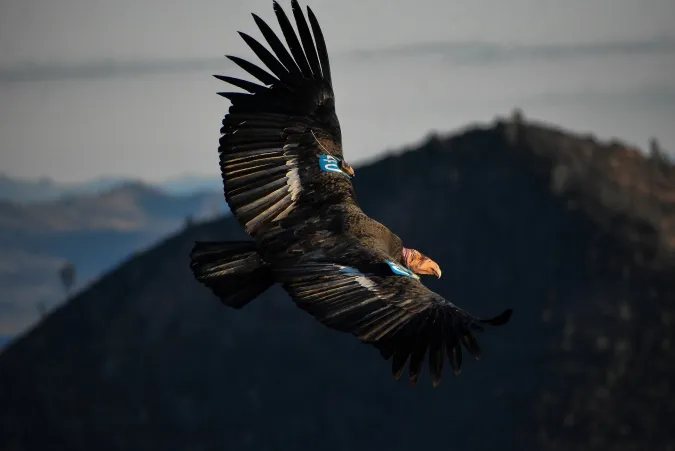
Lead poisoning is the single greatest danger facing California condors. When a condor feeds on an animal shot with lead ammunition, tiny lead fragments can enter its bloodstream and ultimately be fatal.
To address this threat, the Oregon Zoo launched its Lead-Free Hunting Education Program in 2015. The program works with hunters, ranchers, wildlife agencies and others to encourage the use of lead-free alternatives, such as copper ammunition. This effort spans North America and protects not only condors, but all scavenging wildlife, including eagles, hawks and many other species.
As long as lead remains in the environment, wild condors cannot reproduce fast enough to ensure the long-term survival of the species. That’s why the success achieved through the Oregon Zoo’s breeding program at the Jonsson Center for Wildlife Conservation has been so important.
Located in rural Clackamas County, the Jonsson Center holds space for 90 condors, including 16 breeding pairs. The isolated 52-acre facility is designed to limit human contact and prepare young condors to survive in the wild.
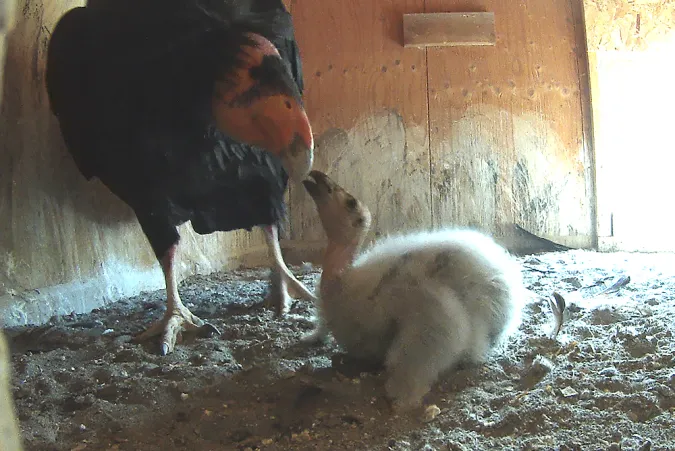
After breeding takes place, eggs are laid from January through March. Once an egg is laid, it is removed from the nest to determine its viability. Eggs are kept safe in an incubator until they’re about to hatch. Sometimes an egg will be placed to be raised by another pair. But most of the time, the egg will remain with its parents. Chicks hatch 54 to 57 days later.
By June, all chicks have usually hatched.
Young condors are then prepared for life in the wild. They receive aversion training to learn not to land on power poles, engage in flight fitness preparations and learn to socialize with adult "mentor" condors.
Once they are about 18 months old, the condors are transferred to field pens at release sites in California and Arizona. After several months of acclimation, they’re released to fly free in the wild.
In 2022, several Oregon Zoo–hatched condors were among the first birds released through the Yurok Tribe–led reintroduction effort in Northern California. Those birds are expected to naturally expand their range into Oregon, and if they do, it will mark the species’ return to the state for the first time in more than a century.
As of 2025, 118 condors hatched through the zoo’s program have been released to the wild.
The life of a California condor
California condors are the largest land birds in North America, with a wingspan of up to 10 feet. They grow up to five feet tall, weigh up to 25 pounds and can live more than 40 years in human care, and sometimes longer in the wild.
California condors are scavengers. Although they do not hunt, they may travel more than 20 miles in search of carrion, which is their sole food source.
Though they do not form flocks, California condors do display social behavior. They often feed together in groups and preen each other after feeding. When breeding, males perform a courtship display spreading wings and bobbing their heads. After the female accepts, pairs mate for life. Females lay a single egg every other year. Eggs hatch after about 57 days.
Adult California condors have few predators, though other birds of prey can feed on condor eggs and chicks. Mountain lions, bobcats and coyotes sometimes attack juveniles or wounded adults.
California condors at the zoo
Located in the Great Northwest area.
The Condors of the Columbia habitat is home to adult birds from the zoo's Jonsson Center for Wildlife Conservation condor recovery program that cannot be released in the wild.