

Saving the Mazama newt
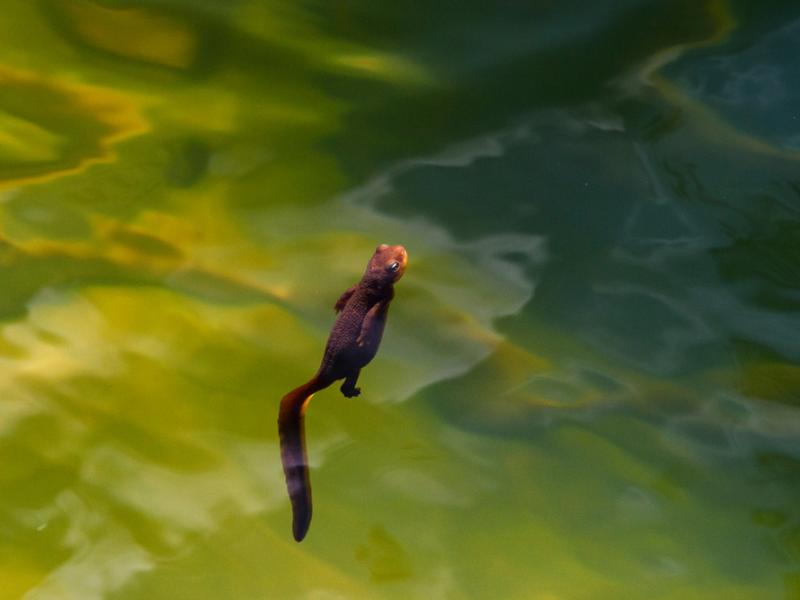
There’s only one place on earth to find the Mazama newt: Oregon’s Crater Lake National Park. But this unique amphibian is at risk of disappearing forever. That’s why the Oregon Zoo has partnered with Crater Lake National Park and the High Desert Museum to help save this rare species.
Invasive signal crayfish have taken over all of the newt’s habitat. Before signal crayfish were introduced to the lake as a food source for non-native fish, the Mazama newt was a top predator in Crater Lake, helping to keep the ecosystem in balance. Now, signal crayfish threaten that balance by attacking Mazama newts, devouring their food sources and driving them into open water where they are eaten by trout.
In 2025, the zoo established a first-of-its-kind program to breed Mazama newts in a special lab located on zoo grounds. These newts will be released back into Crater Lake to restore the population. Meanwhile, the zoo is working with the National Park Service and other partners to find a long-term solution to the crayfish problem.
The life of a Mazama newt
Also known as Crater Lake newts, Mazama newts are a genetically distinct population of rough-skinned newts. They are smaller, more aquatic and have a lower concentration of tetrodotoxin than other populations, and can be identified by their dark or mottled bellies, unlike the bright orange undersides typical of most rough-skinned newts.
Mazama newts are omnivores that mainly feast on aquatic invertebrates including snails and insect larvae, as well as insects.
When mating, newts roll themselves into balls and form pairs in a process called amplexus. These pairs can remain in a courtship stage for several hours. If mating is successful, the male releases a spermatophore that the female uses to fertilize her eggs. Females lay eggs in aquatic vegetation or submerged rocks for protection.
Eggs hatch as larvae within three to ten weeks. The larvae metamorphose into newts within four to five months. Mazama newts may take more than 5 years to mature into breeding adults.
Their primary predator is the invasive signal crayfish.
Mazama newts at the zoo
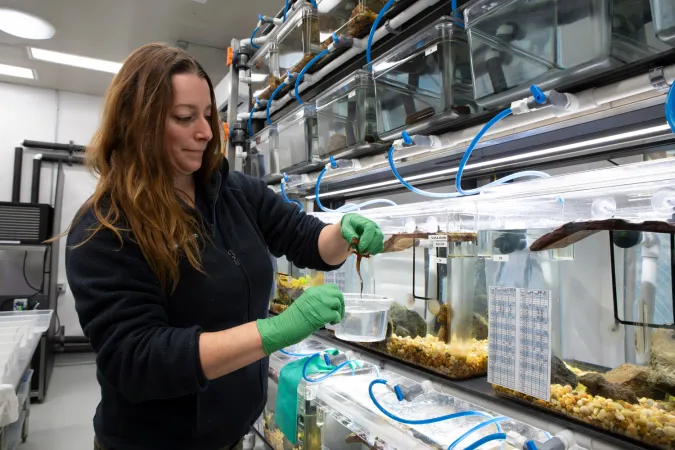
The zoo’s Mazama newt lab is behind the scenes at the zoo. It is equipped to care for the newts at every stage of life, closely replicating Crater Lake’s unique temperature and water quality. This marks the first effort to breed the species, and lab studies are revealing new insights into an animal that is challenging to study in the wild.
Take action for Mazama newts
Help stop the spread! Keep Oregon’s habitats thriving by preventing and reporting invasive species. Learn more: https://oregoninvasiveshotline.org. Make a gift to the Oregon Zoo Foundation to support Mazama newt recovery.