

Saving the Oregon spotted frog
It used to be possible to spot an Oregon spotted frog in wetlands across the Pacific Northwest. Today, they’ve disappeared from about 95 percent of their historic range.
Habitat loss, invasive species, and changes to wetland water levels have pushed this native frog to the brink. Once found from British Columbia to Northern California, the Oregon spotted frog is now listed as Threatened under the Endangered Species Act and is considered the most imperiled native frog in the Northwest.
Oregon spotted frogs are aquatic and spend most of their lives in emergent wetlands. They lay their eggs in seasonally flooded wetland areas where there is full sun exposure and vegetation does not shade the eggs. Over time, many of these wetlands have been drained, dammed, or overtaken by tall, dense-growing invasive plants like reed canarygrass. Invasive American bullfrogs and predatory fish have also spread into much of their remaining habitat, preying on spotted frogs and their tadpoles. Other than a population in Conboy Lake National Wildlife Refuge, Oregon spotted frogs vanished from nearly every wetland in the region.
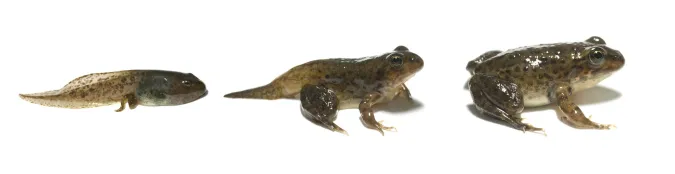
From 2008 to 2012, the Oregon Zoo partnered with the Washington Department of Fish and Wildlife and others to reintroduce Oregon spotted frogs back to Joint-Base Lewis McChord where they had once thrived. Each spring, biologists would collect small portions of egg masses and bring them to the zoo, where they hatched, developed into tadpoles and eventually transformed into young frogs.
In early fall, the frogs were released into protected wetlands where it was thought they might thrive. Scientists continued to monitor these sites for egg masses and returning adults. By the end of the project, the Oregon Zoo helped raise and release 621 Oregon spotted frogs into the wild. In 2012, this collaborative effort received top honors from the Association of Zoos and Aquariums for leadership in species recovery and habitat conservation.
While the project achieved important successes, it also revealed hard truths. Bullfrogs were more widespread than expected, and unusually high water levels during breeding season made breeding difficult. Research at the Oregon Zoo showed that frogs raised in managed care were especially vulnerable to bullfrogs. So the program developed protection strategies and more thorough, longer-term habitat evaluation before reintroduction.
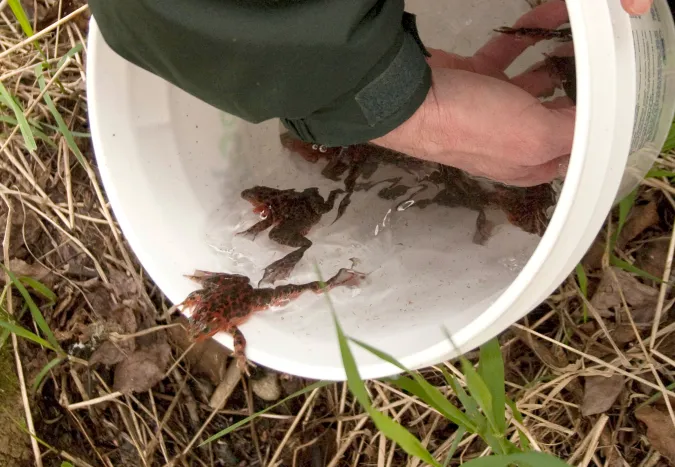
These lessons continue to shape how conservationists approach frog recovery today, as well as recovery for other species, including northern leopard frogs.
Current conservation efforts focus on protecting and restoring wetlands so Oregon spotted frogs can survive. This includes managing vegetation so frogs can lay eggs in shallow, sunny water, addressing changes caused by climate change, irrigation, and development, and responding quickly when bullfrogs invade new sites.
Early action is essential. Waiting until species are on the edge of extinction limits what conservation can achieve. The Oregon Zoo’s work with Oregon spotted frogs created knowledge, tools, and partnerships that can be used again, giving this species, and others like it, a better chance at long-term survival.
The life of an Oregon spotted frog
Oregon spotted frogs are named for the black spots on their reddish-brown skin and can grow up to four inches long. They spend nearly their entire lives in or near water and are rarely found far from wetlands. They breed in late winter at lowland sites and early spring at higher elevation sites. They are communal breeders that lay their eggs on top of or next to each other. Tadpoles take about four months to become frogs, and those that survive reach breeding age within two to three years.
They feed on insects, spiders, algae, and decaying plant matter. While they face natural predators like herons, snakes, and mink, their greatest threat today comes from invasive species and the ongoing loss of healthy wetlands.
Oregon spotted frogs at the zoo
The zoo concluded its Oregon spotted frog rearing efforts in 2012 and does not house Oregon spotted frogs on zoo grounds.
The zoo worked with these partners on frog recovery efforts: Joint Base Lewis-McChord, Mountain View Conservation & Breeding Centre, Northwest Trek Wildlife Park, NW Zoo & Aquarium Alliance, Point Defiance Zoo & Aquarium, Port Blakely Tree Farms, The Nature Conservancy, U.S. Geological Survey, U.S. Fish & Wildlife Service, Washington Department of Fish & Wildlife, Washington State Department of Natural Resources, Washington State Department of Transportation and Woodland Park Zoo.