

Okey-dokey, Enoki! Zoo welcomes rare red panda

Enoki, a furry not-quite-3-year-old, is settling into her new home at the Oregon Zoo
What’s black and white and red all over? Enoki the red panda! The fluffy almost-3-year-old arrived at the Oregon Zoo last week and is already making herself at home.
“We’re so excited to have Enoki here,” said Kelly Gomez, who oversees the zoo’s red panda area. “She was timid at first, but she’s starting to get more comfortable. She’s exploring and snacking and napping, which is everything you want to see in a red panda.”
Although Enoki has full access to her habitat, she may not be visible all the time, keepers say.
“Red pandas are climbers, and Enoki is no exception,” Gomez said. “If you don’t spot her right away, look up — she might be lounging high up in the habitat.”
Gomez says Enoki also spends a fair amount of her day napping, and might be snuggled up inside her den box.
Though they share part of their name with giant pandas, red pandas are in a class all by themselves: The sharp-toothed, ring-tailed omnivores are the only members of the Ailuridae family. Found in the montane forests of the Himalayas and major mountain ranges of southwestern China, their striking red, white and black fur provides camouflage in the shadowed nooks of the trees among reddish moss and white lichens.
Enoki belongs to the refulgens subspecies of red panda, which have darker faces and more prominent rings on their tails.
Red pandas are considered endangered, with populations declining by about 50% over the past 25 years. While exact numbers are uncertain, estimates indicate as few as 2,500 may be left in the wild. In addition to habitat loss and fragmentation, red pandas also face threats from poaching and the illegal wildlife trade.
Enoki was born June 13, 2023, at the Memphis Zoo and came to Portland following a short stay at Seattle’s Woodland Park Zoo. Her move here was based on a recommendation from the Association of Zoos and Aquariums’ Species Survival Plan for red pandas — a cooperative program among accredited zoos that helps create genetically diverse, self-sustaining populations to guarantee the long-term future of animals.
More News
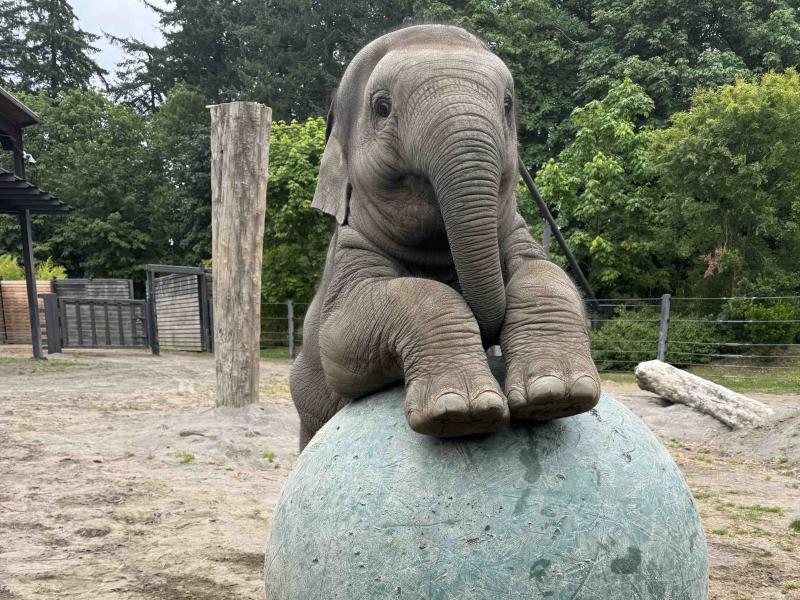
Tula-Tu's still having a ball — but now it's twice as big
Tula-Tu, the young Asian elephant at the Oregon Zoo, now tips the scales at over 1,300 pounds and care staff have given her a ball suitable for her size.July 8, 2026
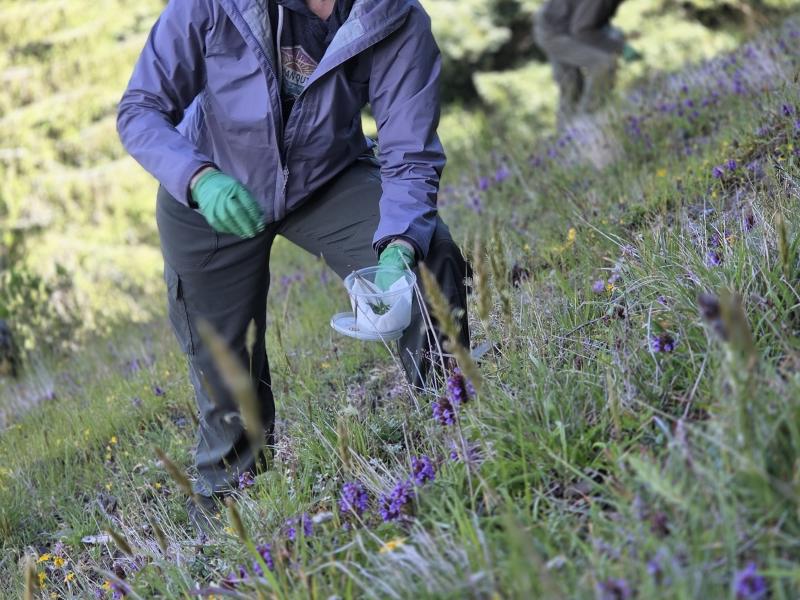
Zoo releases hundreds of rare butterflies at coast
Zoo conservation specialists and their partners released 1,304 Oregon silverspot larvae as part of an effort to save this beautiful and threatened Northwest species.July 1, 2026
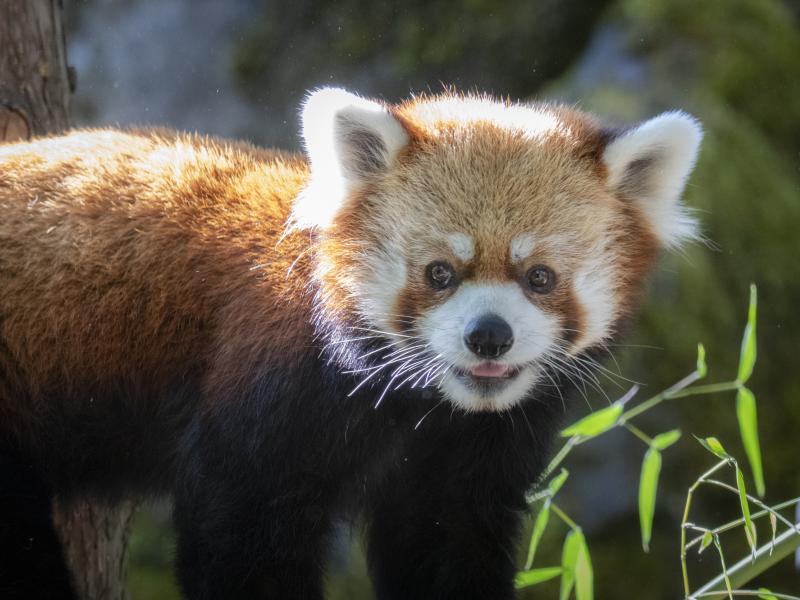
Howdy-do, Liu! Red panda Enoki has a new pal
Liu (Lee-you), a 6-year-old red panda from the Toledo Zoo, is settling into his new home.June 24, 2026