

Primate prime time: Zoo welcomes white-cheeked gibbon

Harper joins Duffy and the zoo's Bornean orangutan family in Primate Forest
The Oregon Zoo is in full swing this week as new arrival Harper joins fellow white-cheeked gibbon Duffy in Primate Forest. Visitors can find the playful pair swinging through the trees in the habitat they share with the orangutan family.
“Harper and Duffy started interacting right away,” said Kate Gilmore, who oversees the zoo’s primate area. “They traveled around the habitat together, then took a break to groom each other.”
White-cheeked gibbons bond through grooming, playing and swinging from tree to tree using their long arms. They also “sing” to one another to strengthen their bonds and mark their territory. Though they all share the species’ signature white cheeks, Gilmore says there’s an easy way to tell Harper and Duffy apart.
“Male white-cheeked gibbons have black fur, but females like Harper turn white or tan in adulthood,” Gilmore said.
Their habitat is home to both white-cheeked gibbons and Bornean orangutans. Harper and Duffy are exploring on their own this week, but orangutans Kitra, Bob and Jolene will join them soon. Duffy is known for his playful antics around 1-year-old Jolene, and Gilmore predicts Harper will be part of the fun as well.
“At 7 years old, Harper is young and full of energy, just like Jolene,” said Gilmore. “We call Duffy ‘Uncle Duffy’ because of how interested he is in Jolene, and I think Harper will make a very fun aunt.”
Harper was born at Disney’s Animal Kingdom in 2015. Her move here was recommended by the Association of Zoos and Aquariums’ Species Survival Plan for gibbons, a cooperative program among accredited zoos to promote genetically diverse, self-sustaining populations of at-risk species.
White-cheeked gibbons are listed as critically endangered by the International Union for Conservation of Nature. Their numbers have declined by at least 80% over the past 50 years because of poaching and habitat loss from illegal logging and agriculture.
More News
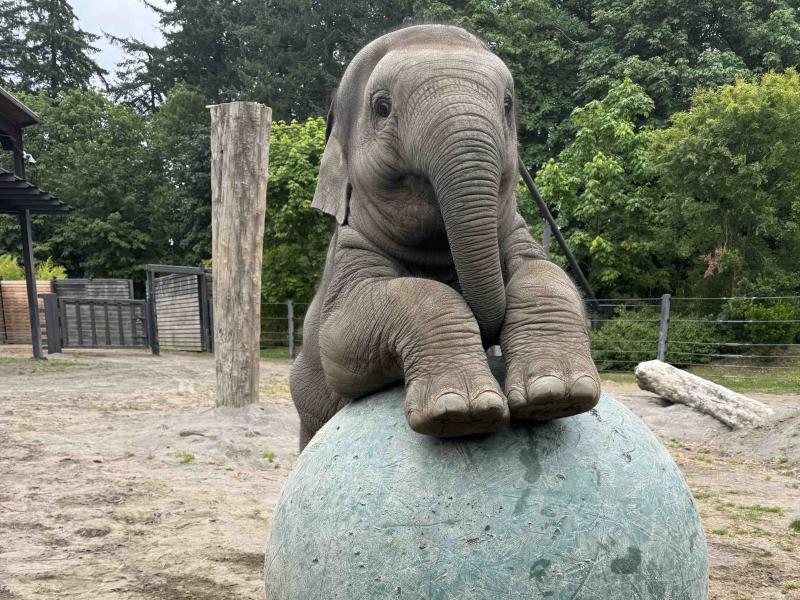
Tula-Tu's still having a ball — but now it's twice as big
Tula-Tu, the young Asian elephant at the Oregon Zoo, now tips the scales at over 1,300 pounds and care staff have given her a ball suitable for her size.July 8, 2026

Zoo releases hundreds of rare butterflies at coast
Zoo conservation specialists and their partners released 1,304 Oregon silverspot larvae as part of an effort to save this beautiful and threatened Northwest species.July 1, 2026
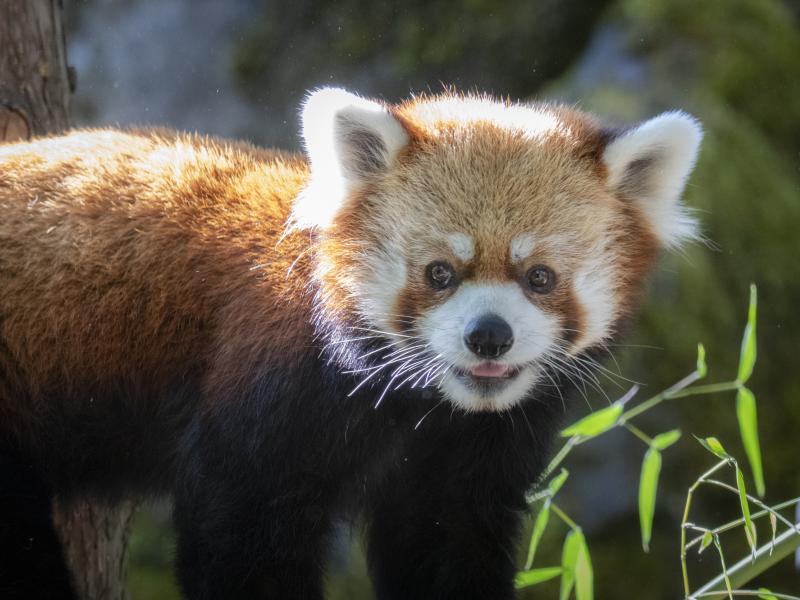
Howdy-do, Liu! Red panda Enoki has a new pal
Liu (Lee-you), a 6-year-old red panda from the Toledo Zoo, is settling into his new home.June 24, 2026