

A ton of fun: 'Little' rhino Tamu tops 2,000 pounds

Rare eastern black rhinoceros is one of the biggest 2-year-olds around
The smallest member of the Oregon Zoo rhino family might not stay that way for long: 2-year-old Tamu now tips the scales at a whopping 2,040 pounds. Born Dec. 4, 2023, the young rhino is nearly as big as his 2,600-pound mom, Jozi.
“He’s the only 2-year-old I know who weighs a ton,” said Virginia Grimley, a keeper in the zoo’s Africa area. “He’s growing up big and strong, just like a young rhinoceros should.”
It will be another year or two before Tamu catches up to King, his 3,100-pound dad, but care staff do expect big things from him.
“Tamu is a lot of fun to watch,” Grimley said. “He might be almost as big as his parents, but he still runs around and plays like the young rhino he is.”
Tamu can usually be seen with Jozi for now, but he’s nearing the age — and size — where wild male rhinos naturally move away from their moms, and eventually he might need the opportunity to mingle with other young rhinos, according to Grimley.
“These animals represent a species that’s among the most imperiled on the planet,” Grimley said. “Hopefully, Tamu can eventually have calves of his own and help grow the population.”
Tamu and his parents, Jozi and King, belong to the eastern subspecies of black rhinoceros. In 2011, the western subspecies of black rhino was declared extinct.
Poaching for rhino horn remains the greatest threat to all five rhino species, and the zoo continues to fund critical on-the-ground interventions needed to ensure their survival.
Since 2013, the zoo has partnered with the International Rhino Foundation to safeguard black rhinos through anti-poaching activities, intensive monitoring programs and work with local communities. Thanks to these and other efforts, the population of this critically endangered species is now on the rise.
Jozi moved to the Oregon Zoo in 2021 from to the Milwaukee County Zoo, joining King, who arrived from Chicago’s Brookfield Zoo earlier that same year. The moves were based on a recommendation from the Association of Zoos and Aquariums’ Species Survival Plan for rhinos. The AZA has established Species Survival Plans for many threatened or endangered species — cooperative programs that help create genetically diverse, self-sustaining populations to guarantee the long-term future of these animals.
“We’ve gone from half a million to a few thousand rhinos left in the blink of an eye,” noted U.K. naturalist Steve Backshall. “While those left in the wild are ludicrously precious, the rhinos that are in zoos (which were bred there, born there and cannot ever be released into the wild) are of disproportionate importance to their kind.”
More News
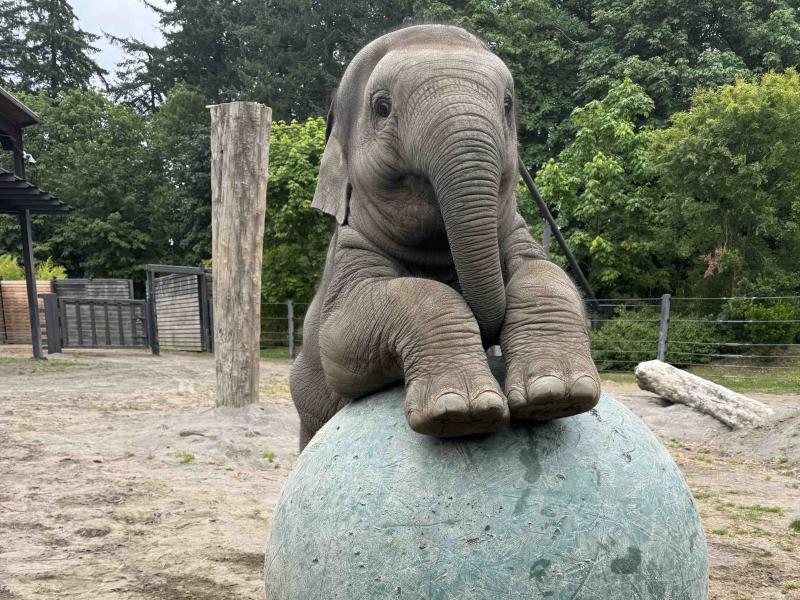
Tula-Tu's still having a ball — but now it's twice as big
Tula-Tu, the young Asian elephant at the Oregon Zoo, now tips the scales at over 1,300 pounds and care staff have given her a ball suitable for her size.July 8, 2026

Zoo releases hundreds of rare butterflies at coast
Zoo conservation specialists and their partners released 1,304 Oregon silverspot larvae as part of an effort to save this beautiful and threatened Northwest species.July 1, 2026
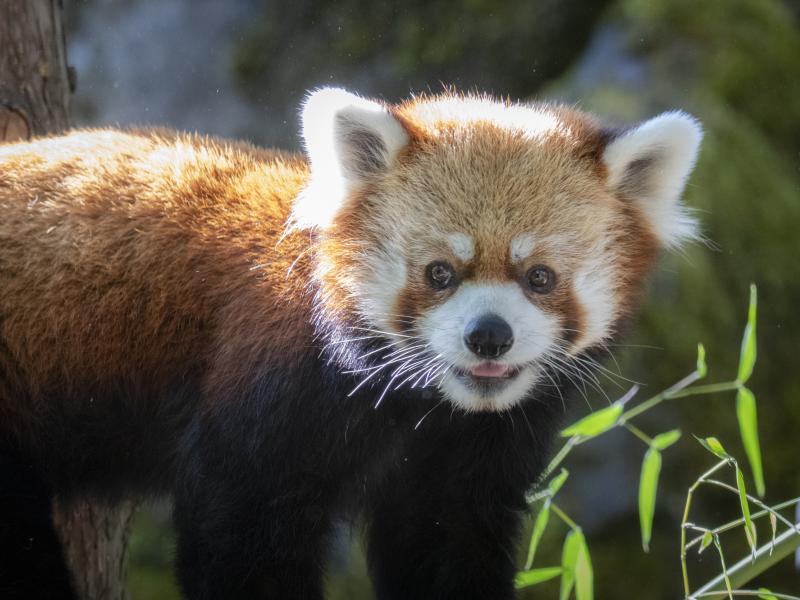
Howdy-do, Liu! Red panda Enoki has a new pal
Liu (Lee-you), a 6-year-old red panda from the Toledo Zoo, is settling into his new home.June 24, 2026