

Saving the Oregon silverspot butterfly
Think humans follow strict diets? Oregon silverspot butterfly caterpillars only eat one thing—the early blue violet (viola adunca)—and it’s key to their survival.
The loss of this plant, along with habitat loss and degradation, development of coastal headlands, fire suppression, grazing and the invasion of non-native plants have all contributed to this the Oregon silverspot’s decline. The Oregon Zoo is committed to restoring silverspot populations and keeping this special butterfly alive for generations to come.
Once common throughout the Oregon Coast, the silverspot was listed as threatened by the U.S. Fish and Wildlife Service in 1980. It was reduced to only four Oregon populations by the 1990s. In 1998, the zoo and its partners began the crucial effort to restore silverspot populations in their native habitats. It’s a careful yearlong process that yields incredible results.
Starting in late summer, conservation biologists in the field bring adult female butterflies to the zoo, where they lay eggs. The eggs hatch, larvae consume their eggshell and immediately look for a place to sleep, entering a stage called diapause for eight months. In the fall, early blue violets are planted in the silverspot’s habitat to bolster their food source. After entering diapause, during the winter the tiny newly hatched larvae are placed in special jars and are placed in refrigerators to simulate the colder temperatures on the Oregon Coast headlands and salt spray meadows.
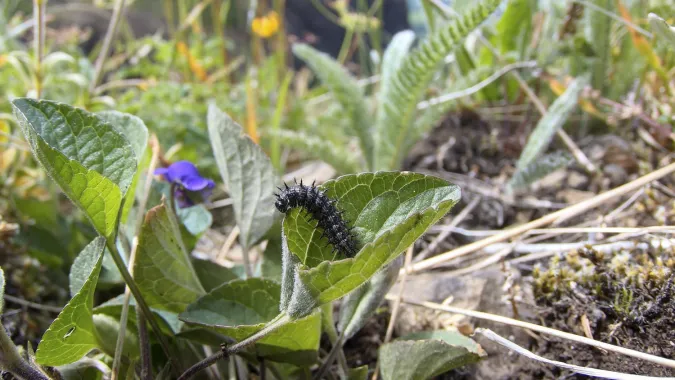
Once spring arrives, the caterpillars are removed from their jars and fed with violet leaves. They grow rapidly over a period of six to eight weeks and begin to pupate in preparation for metamorphosing into butterflies.
Then, when summer comes, the pupae are taken from the zoo and placed in protective release cages on the coast. Biologists watch them every day and when the butterflies emerge from their pupae cases, they are released to join free-flying wild butterflies.
About 2,000 butterflies are released each year at the Oregon Coast. A small subset is kept at the zoo lab to be included in breeding efforts. In 2019, the Oregon zoo lab was the first to successfully breed the Oregon silverspot butterfly in human care. In 2012, the Oregon Zoo and Woodland Park Zoo were awarded the AZA's North American Conservation Award for the cooperative Oregon silverspot recovery program. Recently, zoo staff have assisted field biologists to release silverspots near sites from which they’ve disappeared, including the Nestucca National Wildlife Refuge and three different areas on Saddle Mountain in the Oregon Coast Range.
As of 2025, the Oregon Zoo has released 35,162 silverspots to the wild.
The life of an Oregon silverspot butterfly
Oregon silverspots are medium sized butterflies known for the bright spots on their wings. Females grow slightly larger than males and have wider abdomens. They can grow a wingspan of up to two inches.
Oregon silverspots live along the Oregon coast and coastal range. They are most easily observed on warm, sunny days with low wind. Females fly steadily and rapidly through the air, while males tend to fly more erratically and lower to the ground. Their diet consists of nectar of native coastal flowering plants. Their larvae eat solely the leaves and flowers of the early blue violet.
Oregon silverspot’s predators include birds, spiders and wasps. The biggest threat to their survival is habitat loss and the loss of the early blue violet.
Oregon silverspot butterflies at the zoo
The silverspot conservation lab is behind the scenes at the zoo, but visitors can learn about the program through an interactive exhibit next to the Insect Zoo.
The Oregon Zoo works partners from the U.S. Fish and Wildlife Service, U.S. Forest Service, Oregon Parks and Recreation Department, Woodland Park Zoo, Oregon Department of Corrections-Coffee Creek Correctional Facility, Institute for Applied Ecology, The Nature Conservancy and Sequoia Park Zoo to save these beautiful and essential pollinators.