

Saving the Taylor’s checkerspot butterfly
Vanishing habitats affect all species, from large mammals like polar bears to small, delicate species like the Taylor’s checkerspot butterfly. From 2003 to 2020, the Oregon Zoo worked to restore the population of this native pollinator.
Once abundant in the inland prairies of the Pacific Northwest, the Taylor’s checkerspot habitat has seen a consistent decline. Almost two centuries of agriculture and the growth of urban areas in their native habitats crowded out the butterfly. It’s now a Washington state-endangered species and listed under the U.S. Endangered Species Act.
The zoo’s 16-year program to prevent the Taylor checkerspot’s extinction and increase the population yielded important results.
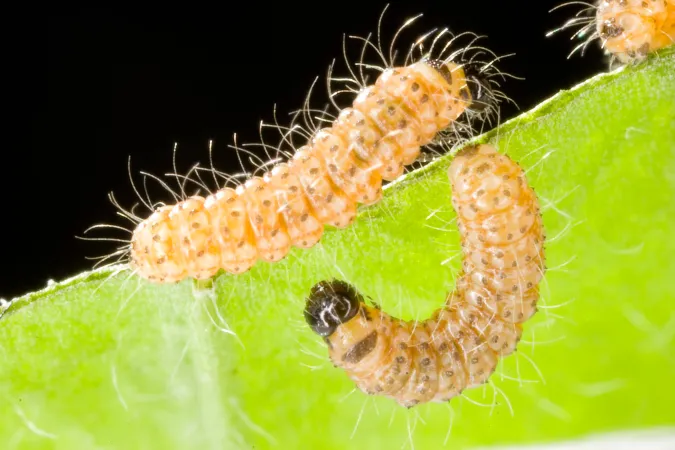
In the spring, adult females and their eggs were collected in the wild and sent to the zoo for hatching and rearing. The hatched caterpillars were fed leaves grown on grounds at the zoo. in 2016 the zoo partnered with Larch Correctional facility, an all-men’s prison in Washington to help supplement the growing needs of the Oregon Zoo. The caterpillars would continue to eat and grow until July, when they entered a mostly inactive phase called "diapause." The caterpillars were then placed in earthenware pots in a sheltered outside area and periodically inspected through the fall-winter season.
During winters, the larvae were brought back into the lab where they began to eat again. As spring returned, most of the caterpillars were released at sites with suitable habitat to continue growing until they could pupate and emerge as butterflies.
A few hundred caterpillars would remain at the zoo to pupate and turn into butterflies that were then bred. The eggs from these females were hatched and reared with eggs collected from the wild to contribute to the next year's release.
Each year a combination of wild-bred and zoo-bred caterpillars were released at sites in the south Puget Sound. These butterflies have helped prevent the extinction of the Taylor’s checkerspot at this site, which is a crucial breeding ground.
In 2011, the zoo partnered with the U.S. Fish and Wildlife Service and the Sustainability in Prisons Project to launch the first-of-its-kind butterfly rearing facility at Mission Creek Correctional Center for Women. The zoo provided training and expertise through 2020, and the program continues to release thousands of larvae each year.
In 2013, the zoo worked with Parks Canada to establish the country’s first rearing facility to help recover a tiny population on Denman Island, where the species was believed to be extinct in Canada. In 2016, the zoo partnered with the Oregon Department of Corrections, Coffee Creek Correctional Facility and USFWS to launch the first and only endangered species propagation program in an Oregon medium-security prison, overseeing the project through 2021.
In 2019, the Oregon Zoo received AZA’s North American Conservation Award for its role in recovering the Taylor’s checkerspot butterfly.
When the program concluded, the Oregon Zoo celebrated the successful raising and release of 33,270 Taylor’s checkerspots to the wild.
Confronting a challenge of this scale requires lots of collaboration. The zoo partnered with a broad and diverse group of organizations to help save the Taylor’s checkerspot. Partners include the U.S. Fish and Wildlife Service, Washington Department of Fish and Wildlife, Xerces Society, Sustainability in Prisons Project, the Nature Conservancy, Woodland Park Zoo, Washington Department of Corrections, Oregon Department of Correctional Facilities, Department of Defense and several local universities.
This dynamic group of partners ensures Taylor’s checkerspot butterflies won’t disappear, even as their habitat areas decrease.
Life of a Taylor’s checkerspot butterfly
Taylor's checkerspots are medium sized butterflies named for their vibrant checkered pattern of orange, red, black, and white. Both males and females share the checkered wing pattern and don’t vary in appearance. Females grow slightly larger than males, with wider abdomens, and can reach a wingspan of up to 2.25 inches.
Once widespread throughout the Pacific Northwest, they are now found only in specific areas with limited populations: eight in Washington, two in Oregon and one in British Columbia. They live in prairie and grassland habitats, as well as some coastal areas.
Taylor’s checkerspots feed on nectar of sea blush, dwarf owl-clover and blue-eyed Marys. Their predators include birds, spiders and wasps. However, their greatest threat is habitat loss.
Taylor’s checkerspot butterflies at the zoo
The Taylor’s checkerspot butterfly conservation program concluded in 2020. It was housed behind-the-scenes with the zoo’s Oregon silverspot butterfly conservation program.