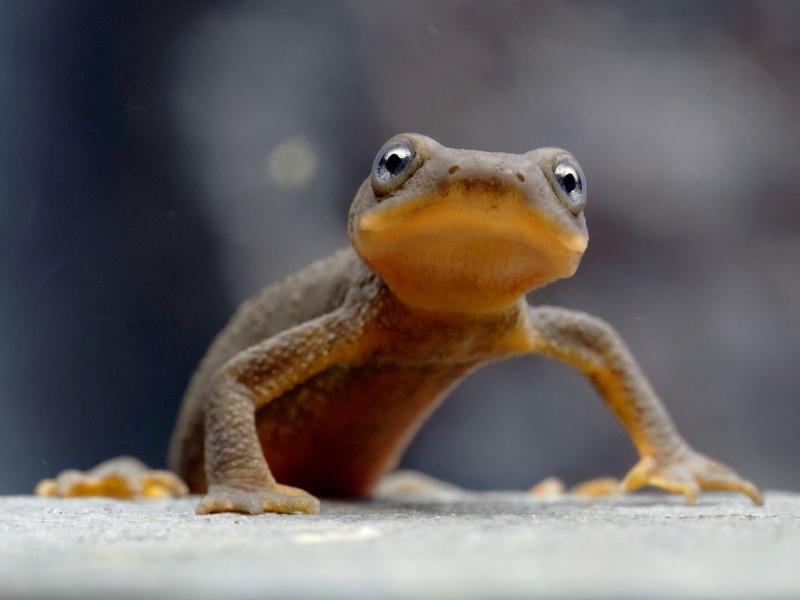


Found throughout western North America from British Columbia to northern Mexico, the western toad is a stocky amphibian with short legs. It tends to walk rather than hop.
The life of a western toad
Western toads grow two to five inches long, weigh two to 2.5 ounces and live up to 12 years in the wild, and as long as 16 years in human care.
They breed in shallow water where females lay eggs. They lay an average of 12,000 eggs at a time! However, more than 99% don’t survive to adulthood. Those that do survive hatch as tadpoles. Then they swarm in groups of hundreds or thousands to find the warmest, shallowest water available. Tadpoles begin life as herbivores. As adults, they become omnivores that eat algae, worms, insects and other small invertebrates.
When not breeding, western toads live in forests and grasslands. They can be found away from water but prefer damp conditions. They often shelter out of view beneath logs, in rock crevices or underground.
Bumps on their backs are sometimes mistaken for warts. They are actually glands that produce a protective toxin to ward off predators, which include snakes, birds of prey and mammals like racoons and badgers.
Western toads at the zoo
Located in the Great Northwest area.