

Happy Newt Year! Recovery program for rare NW amphibian is off to promising start at Oregon Zoo

Conservationists are teaming up to prevent extinction of Crater Lake’s Mazama newt
2026 is full of promise at the Oregon Zoo’s conservation lab, where a group of rare Mazama newts is growing strong. The newts arrived at the lab last August, when the zoo teamed up with the National Park Service and the High Desert Museum in an emergency effort to save the species from extinction.
“The newts are doing really well, which is wonderful to see,” said Julia Low, who oversees the zoo’s recovery efforts. “We’ve seen them grow at least 20% in weight and in length since they arrived, which tells us they're getting what they need to develop properly.”
Since Mazama newts are found only in Crater Lake, Low and her team work to replicate their natural conditions every way they can — from lighting and temperature to rocks and plant life.
“The lights are on timers to match sunrise and sunset at the lake,” Low said. “And we keep it very cold in the lab, just like it would be there. We have to keep our jackets on inside — but if it helps the newts, it’s worth it.”
The conservation lab also is propagating native Crater Lake snails as a natural food source for the newts. Hundreds of snails have hatched in the lab, and conservationists hope this will be helpful for young newts as they are released into protected areas of the lake.
Historically, Mazama newts were a top aquatic predator in Crater Lake, but in recent years they’ve been threatened by invasive signal crayfish, which are taking over the lakeshore.
“If we don’t act now, the Mazama newt could disappear,” said David Hering, an aquatic ecologist at Crater Lake National Park. “We need to keep a population of these newts safe in human care while we work on a long-term solution to the invasive crayfish problem, and that’s where the Oregon Zoo comes in.
The zoo’s Mazama newt lab is equipped to care for the amphibians at every stage of life. If all goes according to plan, their offspring will eventually be released back into the lake.
“We know how important this work is, and we’re up to the challenge,” Low said. “With more newts disappearing every year, now is the time to act to save this species.”
This is the first cohort of Mazama newts to live at the Oregon Zoo’s conservation lab, but the zoo has a history of bringing native species back from the brink. For more than 25 years, the zoo has spearheaded conservation triumphs with California condors, native butterflies, northwestern pond turtles, northern leopard frogs and more.
The Mazama newt has been included as a “state sensitive” species in Oregon’s revised State Wildlife Action Plan and has been petitioned for listing under the Endangered Species Act. The zoo’s Mazama newt recovery efforts are conducted in partnership with the National Park Service and the High Desert Museum.
More News
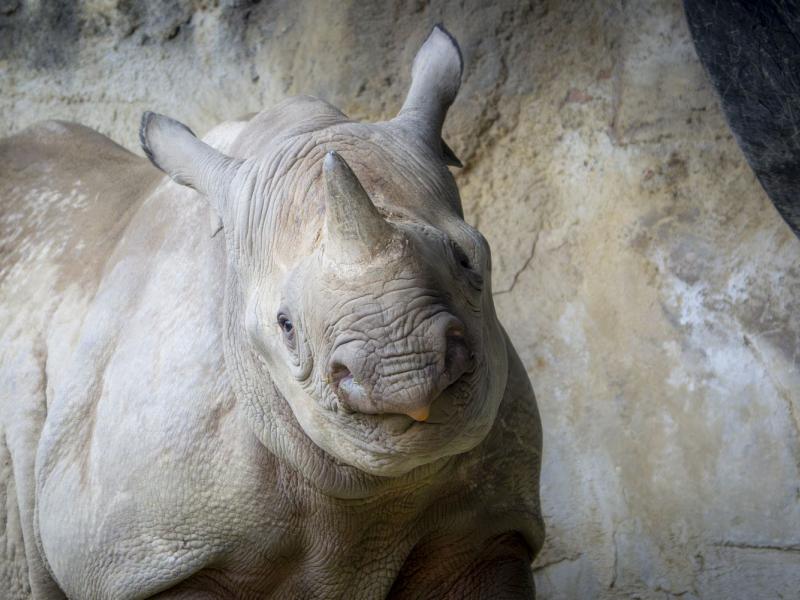
A ton of fun: 'Little' rhino Tamu tops 2,000 pounds
The smallest member of the Oregon Zoo rhino family might not stay that way for long!July 15, 2026
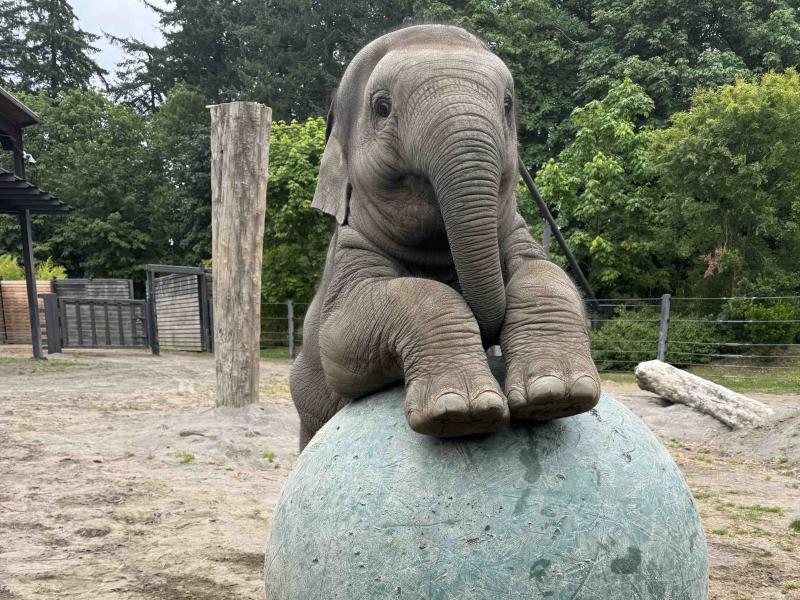
Tula-Tu's still having a ball — but now it's twice as big
Tula-Tu, the young Asian elephant at the Oregon Zoo, now tips the scales at over 1,300 pounds and care staff have given her a ball suitable for her size.July 8, 2026
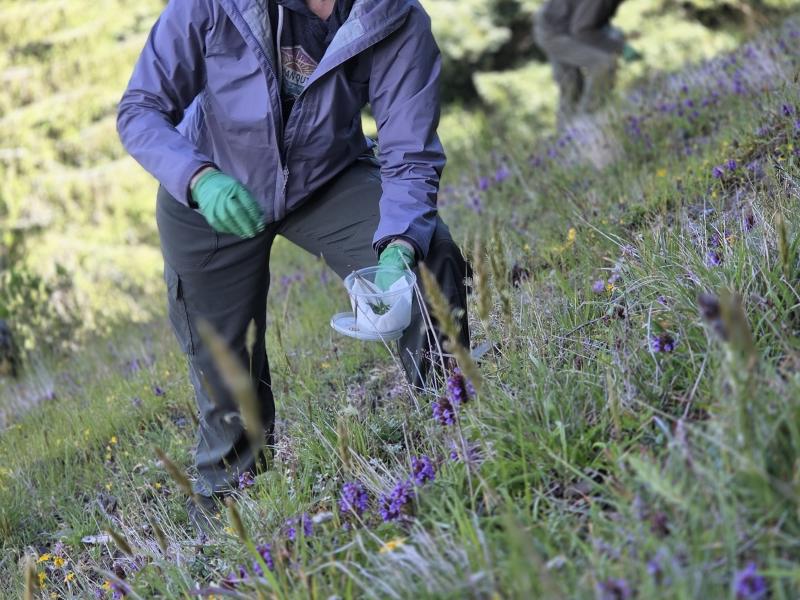
Zoo releases hundreds of rare butterflies at coast
Zoo conservation specialists and their partners released 1,304 Oregon silverspot larvae as part of an effort to save this beautiful and threatened Northwest species.July 1, 2026