

Saving the northwestern pond turtle
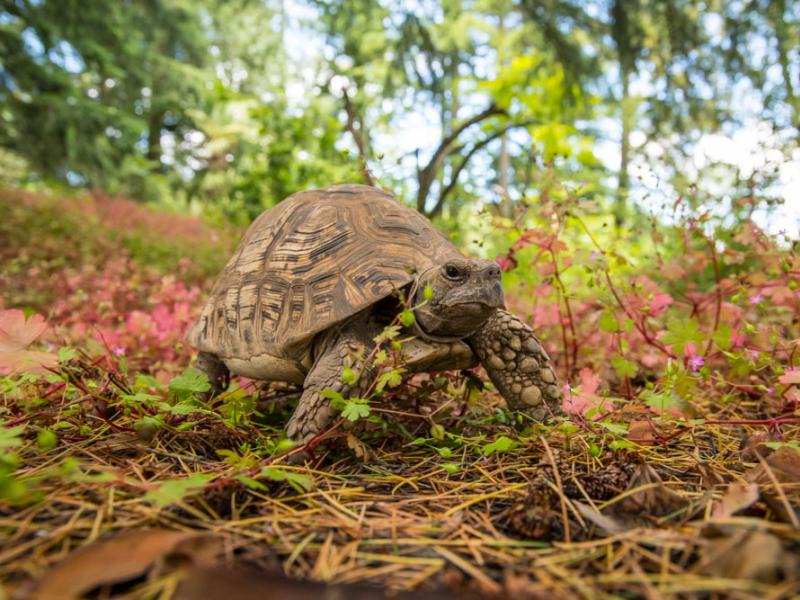
They survived the dinosaurs, but turtles worldwide are facing a modern extinction crisis, with half of all species at risk of disappearing. The Oregon Zoo is working to ensure the northwestern pond turtle can survive for centuries to come.
Once common from the Puget Sound to Baja California, the small, long-lived northwestern pond turtle is listed as endangered in Washington and sensitive in Oregon. The zoo is at the forefront of restoring northwestern pond turtle populations in Washington through a collaborative recovery program.
Northwestern pond turtles face several threats including habitat loss, shell disease, invasive plants that harm nests, and most notably, invasive predators like the American bullfrog and largemouth bass.
Saving this native turtle means boosting its numbers in the wild while reducing the threats it faces. That’s why the recovery partnership matters. At the Oregon and Woodland Park Zoos, turtles are raised and cared for until they’re ready to be released into Pacific Northwest habitats, where they can reproduce and help rebuild the population. At the same time, the Washington Department of Fish and Wildlife (WDFW) removes invasive bullfrogs and tracks how the turtles are doing. Other partners are helping restore turtle habitat. As a result, northwestern pond turtle numbers are increasing in some protected areas.
In 1990, only two pond turtle sites were left in Washington. Today, thanks to the recovery partnership, there are six populations including two in Puget Sound and four in the Columbia River Gorge. More than 1,800 turtles have been head-started and released to these sites. Studies have revealed that an estimated 95 percent of turtles released in the Columbia River Gorge survived their first year.
It’s a yearlong effort that yields incredible results. In the spring, WDFW biologists survey for adult turtles. In the summer, females dig a nest in dry, densely packed soil and deposit eggs into the nest, which she then covers and abandons. The eggs incubate naturally until the following spring when the turtle hatchlings emerge from their nests.
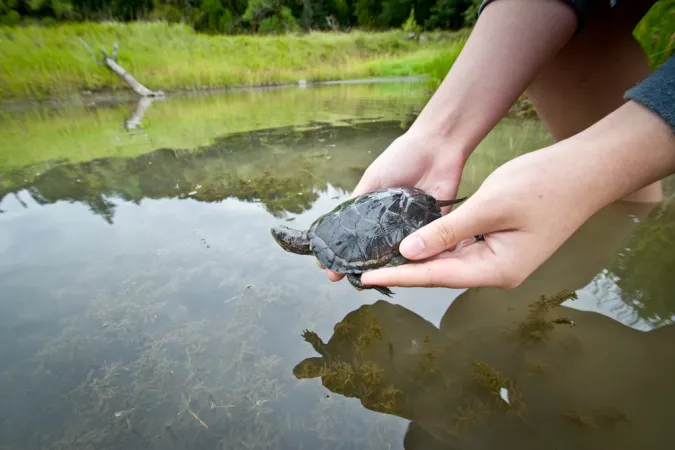
When spring comes, biologists ¬collect some of the quarter-sized hatchlings and move them to zoo facilities, where they grow and eat in a predator-free 'simulated summer' environment. During the winter, hatchlings in the wild become dormant in the cold. But the enhanced light and warmth at the zoo stimulates them to continue to eat and grow.
After a year, the zoo-reared juvenile turtles are nearly three times larger than if they had remained in the wild and survived. Now large enough to avoid being eaten by common non-native predators like bullfrogs, they are released at sites selected by WDFW.
As of 2025, the Oregon Zoo has raised and released more than 850 turtles to the wild.
The life of a northwestern pond turtle
Northwestern pond turtles grow to 3.5 to 7.5 inches long, weigh 2.2 pounds or more and live from 40 to 70 years old. One of two turtle species native to the Pacific Northwest, they are found in marshes, streams, rivers, ponds and lakes throughout the west coast from the Puget Sound to northern Mexico.
During mating, females find dry soil and use hind legs to dig a hole where she lays her eggs. Females lay three to 13 eggs at time. They then fill the hole with dirt and vegetation, covering it with wet soil to keep the environment humid. This delicate process can take two to four hours.
They are omnivores that feast on a variety of foods including aquatic vegetation, insects, snails, leeches, frog eggs and small fish.
Predators include coyotes, raccoons, otters and large birds of prey. Newborns are especially vulnerable to predators. Invasive predators like the American bullfrog easily consume baby northwestern pond turtles due to their small size, which is about the same as a quarter.
Learn more about the project here.
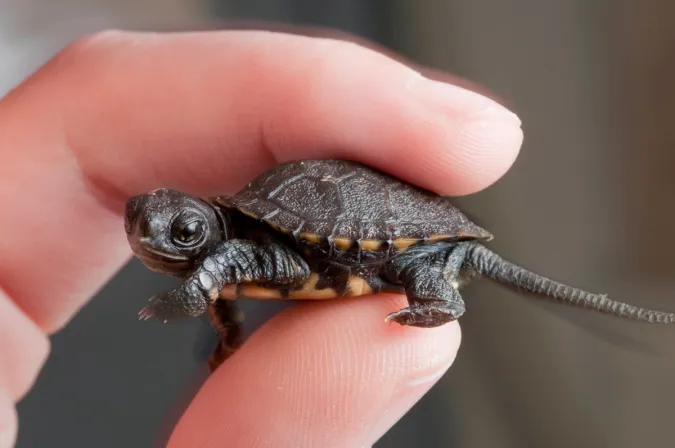
Northwestern pond turtles at the zoo
Located in the Great Northwest area.
The Western Pond Turtle Recovery Project is a collaborative effort by the Oregon Zoo, Woodland Park Zoo, Washington Department of Fish and Wildlife, U.S. Fish and Wildlife Service, Bonneville Power Administration, U.S. Forest Service and other partners.
Take action for native turtles
Both of Oregon's native turtles - the western pond turtle and the western painted turtle - are listed as "critical" on the state's sensitive species. Find out how to help protect native turtles and report turtle sightings.